Science
The carbon cycle and climate change
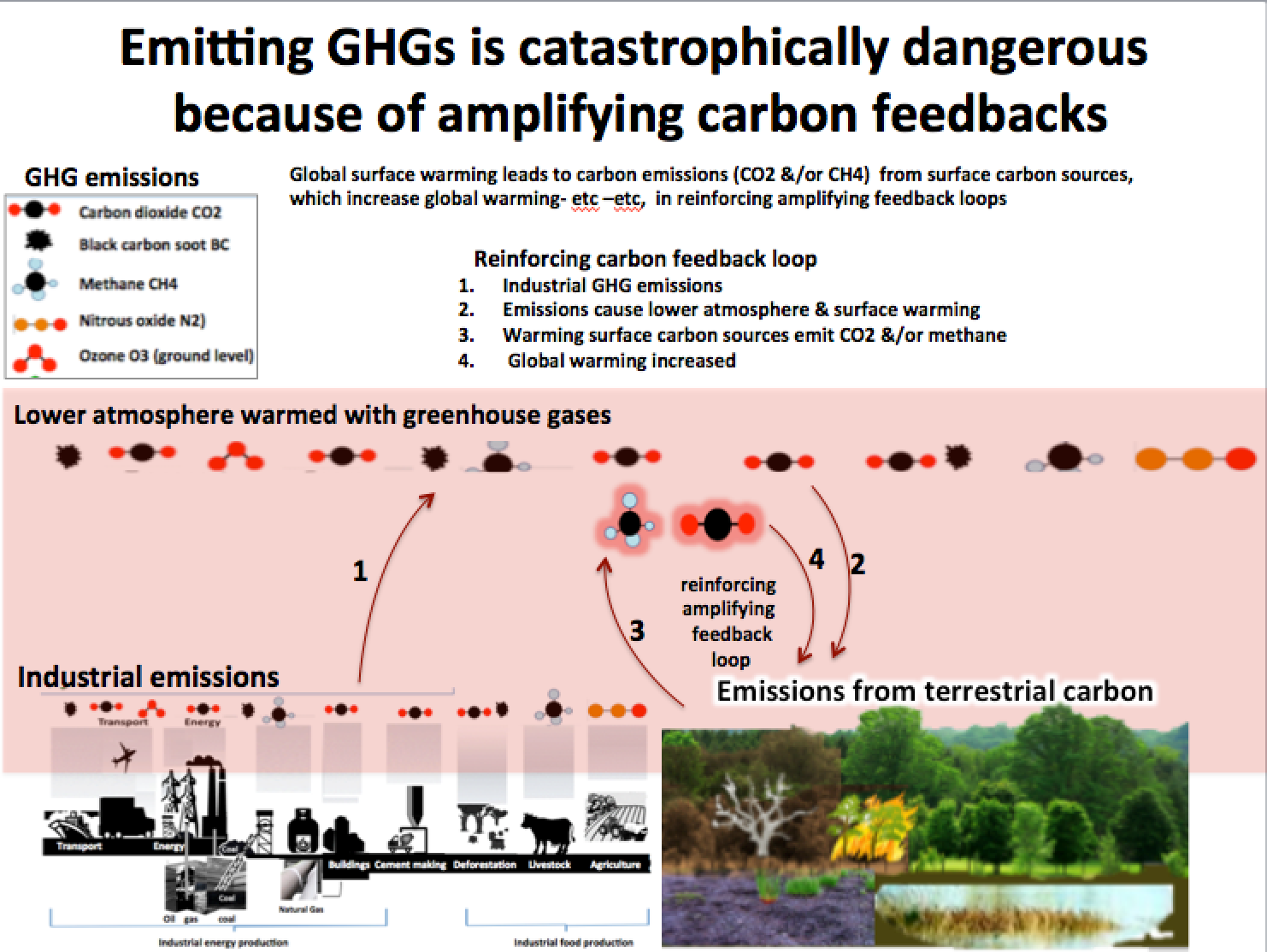
The carbon cycle we are taught about is a carbon re-cycle that only stores carbon for a while, then returns it to the atmosphere.
The carbon cycle can only truly sink carbon (removing it from the carbon cycle) extremely slowly- hence CO2 lasts many 1000s of years.
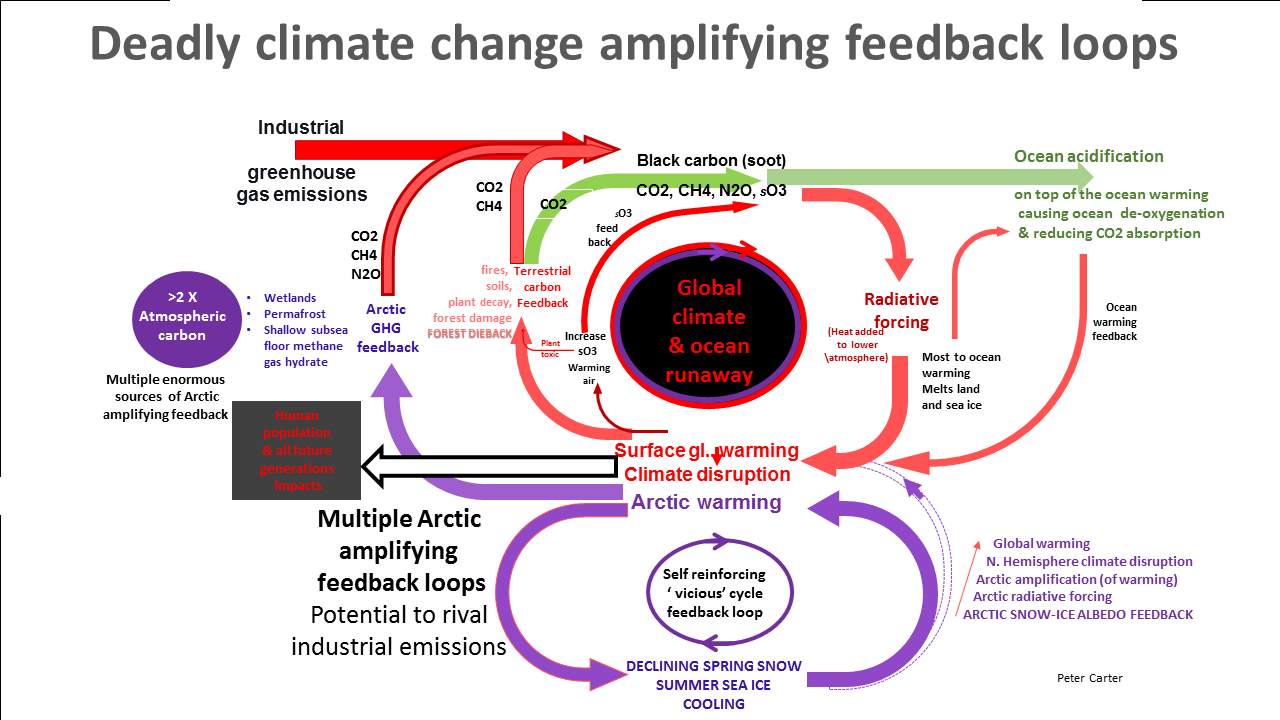
Another reason for momentum and catastrophic danger is that many chain reactions are set in motion of many interacting reinforcing impacts and many feedbacks.
The carbon cycle we are taught about is a carbon re-cycle that only stores carbon for a while, then returns it to the atmosphere.
The carbon cycle can only truly sink carbon (removing it from the carbon cycle) extremely slowly- hence CO2 lasts many 1000s of years.
Another reason for momentum and catastrophic danger is that many chain reactions are set in motion of many interacting reinforcing impacts and many feedbacks.
The issue is strictly ATMOSPHERIC GREENHOUSE GAS POLLUTION that causes (strictly) GLOBAL HEATING (over 90% to the oceans)
and SURFACE WARMING
Mainly caused by FOSSIL FUEL GHG POLLUTION emissions (CO2 and methane)
It is damaging to people and the planet and if continued, constant emissions are not stopped deadly to the biosphere by CLIMATE DISRUPTION
and OCEAN DISRUPTION acidification (CO2)+heating+ deoxygenation
and SURFACE WARMING
Mainly caused by FOSSIL FUEL GHG POLLUTION emissions (CO2 and methane)
It is damaging to people and the planet and if continued, constant emissions are not stopped deadly to the biosphere by CLIMATE DISRUPTION
and OCEAN DISRUPTION acidification (CO2)+heating+ deoxygenation
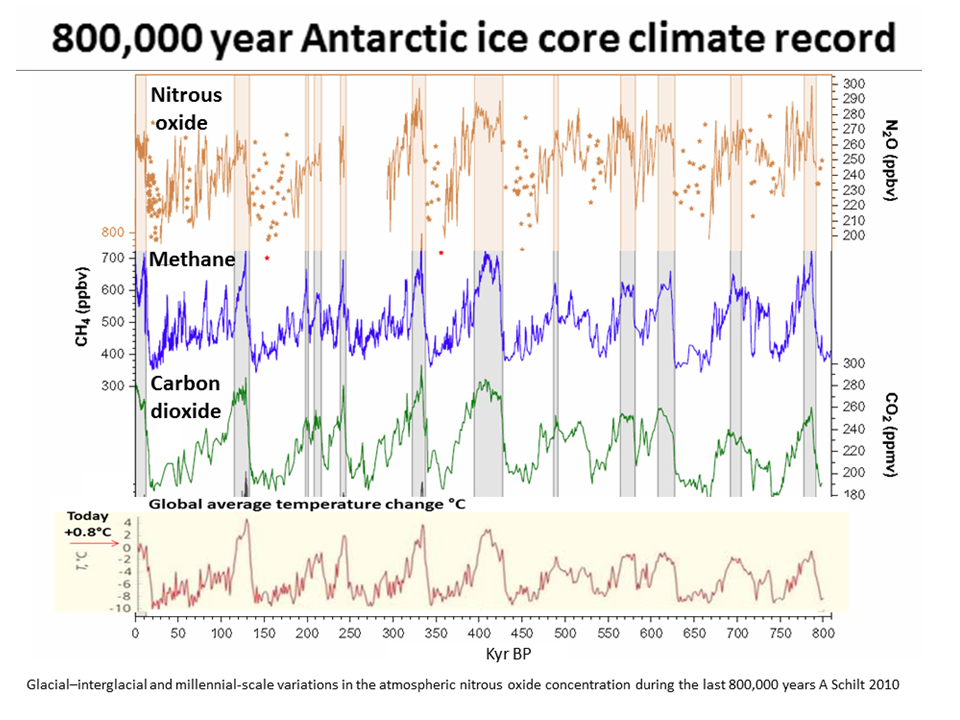
The three main greenhouse gases (mainly CO2) naturally produced by planet Earth that are the planet's thermostat, swinging the climate in and out of ice ages and warm inter-glacials.
We know this from the 800,000 year ice core
We emit several others as well constantly, in smaller amounts.
Then consider that we intentionally try to burn the most fossil fuels that we can to constantly increase our energy fossil fuel energy output, which we call 'economic growth'.
It has to constantly increase our global CO2 emissions, which has to constantly increase radiative forcing (planetary heating) and ocean acidification (CO2 emissions).
We no longer have to do this, because clean renewable energy sources can far more than replace all the fossil fuel the world uses.
The constant emission of several long lasting (in the atmosphere) powerful global warming greenhouse gases would seem to be inherently highly dangerous.
The reason is because they are long lasting, they all have to accumulate in the atmosphere so long as they being constantly emitted, and it would have to take a very long time after stopping emissions for their concentration in the atmosphere to drop. Methane would drop after a few years, but CO2 and nitrous oxide last 100s years in the atmosphere
We know they are very powerful because they are 'trace' gases existing in tiny concentrations of parts per million and parts per billion.
Even so they make the difference between a habitable planet and a frozen lifeless planet.
Then on top of that there is another big reason.
Feedbacks
Climate change science is all about feedbacks.
Dangerous climate change is all about
+ve amplifying feedbacks.
Then consider that we intentionally try to burn the most fossil fuels that we can to constantly increase our energy fossil fuel energy output, which we call 'economic growth'.
It has to constantly increase our global CO2 emissions, which has to constantly increase radiative forcing (planetary heating) and ocean acidification (CO2 emissions).
We no longer have to do this, because clean renewable energy sources can far more than replace all the fossil fuel the world uses.
The constant emission of several long lasting (in the atmosphere) powerful global warming greenhouse gases would seem to be inherently highly dangerous.
The reason is because they are long lasting, they all have to accumulate in the atmosphere so long as they being constantly emitted, and it would have to take a very long time after stopping emissions for their concentration in the atmosphere to drop. Methane would drop after a few years, but CO2 and nitrous oxide last 100s years in the atmosphere
We know they are very powerful because they are 'trace' gases existing in tiny concentrations of parts per million and parts per billion.
Even so they make the difference between a habitable planet and a frozen lifeless planet.
Then on top of that there is another big reason.
Feedbacks
Climate change science is all about feedbacks.
Dangerous climate change is all about
+ve amplifying feedbacks.
It is multiple amplifying feedbacks that can
lead to runaway global climate change AND ocean acidification
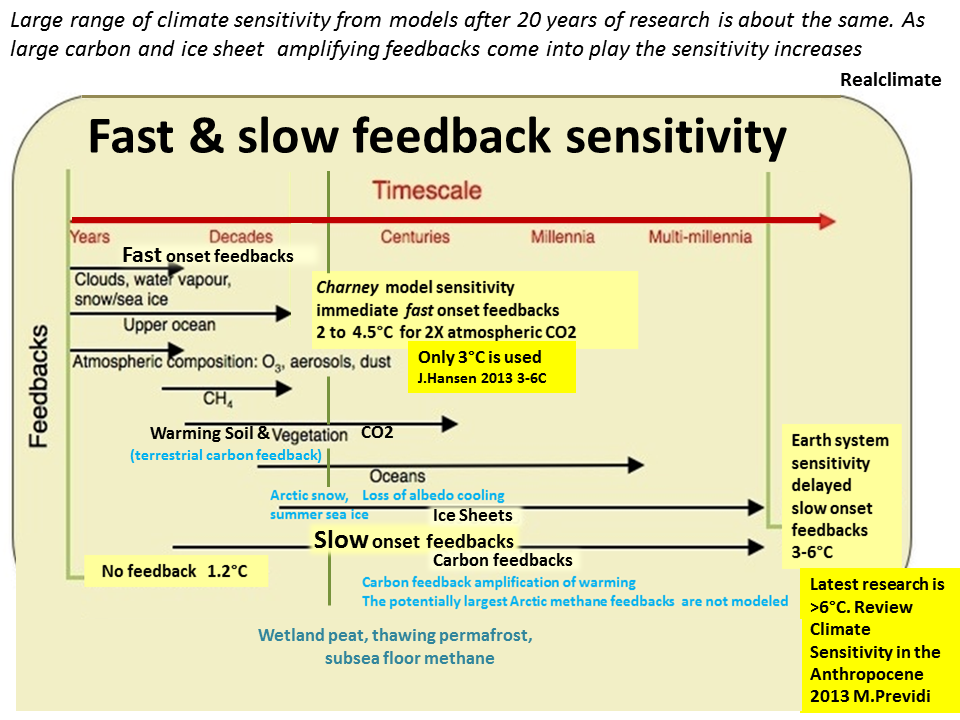
1. Fast (reacting) feedbacks There are +ve and -ve fast feedbacks
that act almost immediately the climate system is forced
(warmed heated). The largest of these amplifying feedbacks
is increasing water vapor (a GHG) which increases with warming.
lead to runaway global climate change AND ocean acidification
1. Fast (reacting) feedbacks There are +ve and -ve fast feedbacks
that act almost immediately the climate system is forced
(warmed heated). The largest of these amplifying feedbacks
is increasing water vapor (a GHG) which increases with warming.
2. Slow (reacting) feedbacks There are very large sources
of slow feedbacks that take significant amount of warming to respond.
These are loss of ice sheet albedo cooling and planetary emissions of
greenhouse gases (GHGs) - both in response to global warming.
Catastrophic climate system danger
The greatest global warming danger is all about the many positive amplifying feedbacks.
Forcing (heating up) the climate system is inherently catastrophically dangerous because of the many very large positive amplifying feedbacks predominate.
Climate Emergency Science – Greenhouse Gas Pollution
The fact that they are all 'lasting gases' (IPCC calls these 3 main GHGs long lasting) or persistent in the atmosphere makes them more dangerous because they are cumulative in the atmosphere over time, so long as they are emitted.
CO2 is the most persistent. A simple climate model shows twenty per cent of carbon dioxide emitted into the atmosphere lasts for 1000 years. Nitrous oxide emitted will last for at least 100 years. They are therefore for extremely persistent and cumulative.
The fact is that by the nature of their industrial sources for goods and services, they are constantly emitted - making them even more dangerous.
We have therefore proven by the basic science of the greenhouse
gases and simple logic that constantly emitting them is
extremely dangerous.
Of course the gases are not inherently dangerous so long as
they are in a stable safe atmospheric concentration;
we need them in the right amount in the atmosphere to survive.
It is the industrial services and activities that constantly emit
the GHGs. that is the great danger.
There have been natural large increases in atmospheric GHGs that have resulted in extinction events wiping out most of life. We know an increase in CO2 and methane has been behind these massive extinctions.
More on the GHGs
Each greenhouse gas has a particular quality that increases the danger of its emission.
CO2 Carbon dioxide is regarded as lasting in the atmosphere for 100 years. However, it is extremely persistent because 20% of emissions last in the atmosphere for 1000 (one thousand) years.
CH4 Methane lasts in the atmosphere for 12 years, but the emissions of methane carry on global warming longer than 12 years. This is because methane disappears over 12 years because it is converted to other greenhouse gases, notably water vapor and carbon dioxide.
Another dangerous aspect of methane emission, which is unique to methane, is that more methane is poured into the atmosphere the longer subsequent emissions last in the atmosphere. Methane is an extremely potent global warming gas. Its global warming effect (global warming potential) is 100 times that of carbon dioxide for 10 years after emission and 70 times that of carbon dioxide for 20 years after its emission.
N2O Nitrous oxide is extremely persistent in the atmosphere lasting at least 100 years. Over this period of time its global warming effect is 300 times that of carbon dioxide.
These are the three main global warming greenhouse gases being constantly emitted by fossil fuel industrialized civilization. Industrial civilization emits other greenhouse gases too.
These are ground level (tropospheric) ozone and a long list of human-made chemicals, most of which are halocarbons.
Trop O3 Ground level ozone is a result of fossil fuel air pollution. It is formed by a chemical reaction in the air catalyzed by heat and sunlight, and therefore its concentration increases with global warming. It is toxic to plant health as well as to human health. As a result, the increased concentration of ground-level ozone with global warming will damage agricultural crops. It will also reduce the capacity of planetary vegetation to take up carbon dioxide from the air, and this is projected to constitute a significant carbon feedback (by which global warming gives rise to more warming).
HaloCs Halocarbons Although the human made greenhouse-gas industrial chemicals are present in the atmosphere at the smallest concentration of all greenhouse gases, they include the most potent global warming and the longest lasting of all greenhouse gases.
Industrial emissions of all long lasting greenhouse gases must stop because of the particular dangerous qualities of each, as well as their accumulative property in general.
2. Slow (reacting) feedbacks There are very large sources
of slow feedbacks that take significant amount of warming to respond.
These are loss of ice sheet albedo cooling and planetary emissions of
greenhouse gases (GHGs) - both in response to global warming.
Catastrophic climate system danger
The greatest global warming danger is all about the many positive amplifying feedbacks.
Forcing (heating up) the climate system is inherently catastrophically dangerous because of the many very large positive amplifying feedbacks predominate.
Climate Emergency Science – Greenhouse Gas Pollution
The fact that they are all 'lasting gases' (IPCC calls these 3 main GHGs long lasting) or persistent in the atmosphere makes them more dangerous because they are cumulative in the atmosphere over time, so long as they are emitted.
CO2 is the most persistent. A simple climate model shows twenty per cent of carbon dioxide emitted into the atmosphere lasts for 1000 years. Nitrous oxide emitted will last for at least 100 years. They are therefore for extremely persistent and cumulative.
The fact is that by the nature of their industrial sources for goods and services, they are constantly emitted - making them even more dangerous.
We have therefore proven by the basic science of the greenhouse
gases and simple logic that constantly emitting them is
extremely dangerous.
Of course the gases are not inherently dangerous so long as
they are in a stable safe atmospheric concentration;
we need them in the right amount in the atmosphere to survive.
It is the industrial services and activities that constantly emit
the GHGs. that is the great danger.
There have been natural large increases in atmospheric GHGs that have resulted in extinction events wiping out most of life. We know an increase in CO2 and methane has been behind these massive extinctions.
More on the GHGs
Each greenhouse gas has a particular quality that increases the danger of its emission.
CO2 Carbon dioxide is regarded as lasting in the atmosphere for 100 years. However, it is extremely persistent because 20% of emissions last in the atmosphere for 1000 (one thousand) years.
CH4 Methane lasts in the atmosphere for 12 years, but the emissions of methane carry on global warming longer than 12 years. This is because methane disappears over 12 years because it is converted to other greenhouse gases, notably water vapor and carbon dioxide.
Another dangerous aspect of methane emission, which is unique to methane, is that more methane is poured into the atmosphere the longer subsequent emissions last in the atmosphere. Methane is an extremely potent global warming gas. Its global warming effect (global warming potential) is 100 times that of carbon dioxide for 10 years after emission and 70 times that of carbon dioxide for 20 years after its emission.
N2O Nitrous oxide is extremely persistent in the atmosphere lasting at least 100 years. Over this period of time its global warming effect is 300 times that of carbon dioxide.
These are the three main global warming greenhouse gases being constantly emitted by fossil fuel industrialized civilization. Industrial civilization emits other greenhouse gases too.
These are ground level (tropospheric) ozone and a long list of human-made chemicals, most of which are halocarbons.
Trop O3 Ground level ozone is a result of fossil fuel air pollution. It is formed by a chemical reaction in the air catalyzed by heat and sunlight, and therefore its concentration increases with global warming. It is toxic to plant health as well as to human health. As a result, the increased concentration of ground-level ozone with global warming will damage agricultural crops. It will also reduce the capacity of planetary vegetation to take up carbon dioxide from the air, and this is projected to constitute a significant carbon feedback (by which global warming gives rise to more warming).
HaloCs Halocarbons Although the human made greenhouse-gas industrial chemicals are present in the atmosphere at the smallest concentration of all greenhouse gases, they include the most potent global warming and the longest lasting of all greenhouse gases.
Industrial emissions of all long lasting greenhouse gases must stop because of the particular dangerous qualities of each, as well as their accumulative property in general.
The science makes it clear that constantly increasing atmospheric CO2 and other greenhouse pollution is inherently catastrophically dangerous to all future life (land and oceans).
Fossil Fuels The environmental health issue of fossil fuels is toxic air pollution and atmospheric GHG pollution.
Fossil Fuels The environmental health issue of fossil fuels is toxic air pollution and atmospheric GHG pollution.
2018 VIDEO John Holdren Why climate change is climate disruption, we are beyond dangerous climate interference, and have to prevent catastrophic climate disruption
NET ZERO The popular buzz words today are net zero emissions, climate neutral. It is imprecise and allows the continued combustion of fossil fuels. Mitigation requires ZERO CARBON COMBUSTION
No fossil burning or biomass burning. <onlyzerocarbon>
Oct 2020 FoE Net Zero Fraud
We are at 2.4°C equilibrium warming by NOAA AGGI (atmospheric CO2eq)
Also by James Hansen et al. Nov. 2023, Global warming in the pipeline
No fossil burning or biomass burning. <onlyzerocarbon>
Oct 2020 FoE Net Zero Fraud
We are at 2.4°C equilibrium warming by NOAA AGGI (atmospheric CO2eq)
Also by James Hansen et al. Nov. 2023, Global warming in the pipeline

Climate Emergency Institute
Changing the chemistry of the atmosphere, expert video covers climate change science, VIDEO Holmes Hummel

Double click here to edit this text.
For 1.5°C AND 2°C global emissions emissions decline by 2025 IPCC AR6 (IPCC Chair)
CLIMATE SYSTEM
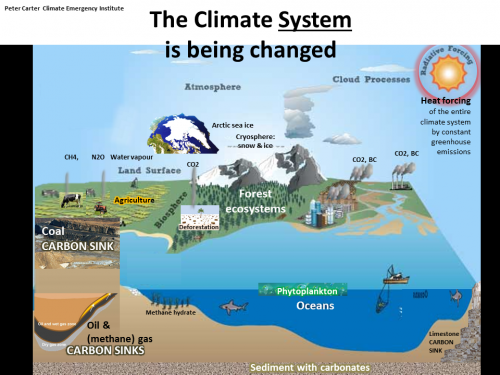
Climate change is in fact climate System Change.
For example the oceans are being changed
The largest component by far is the oceans, which ultimately determine the climate and climate change. Practically all the biosphere makes up the climate system, even the rocks.
Climate change is in fact climate System Change.
For example the oceans are being changed
The largest component by far is the oceans, which ultimately determine the climate and climate change. Practically all the biosphere makes up the climate system, even the rocks.
The sources of the greenhouse emissions.
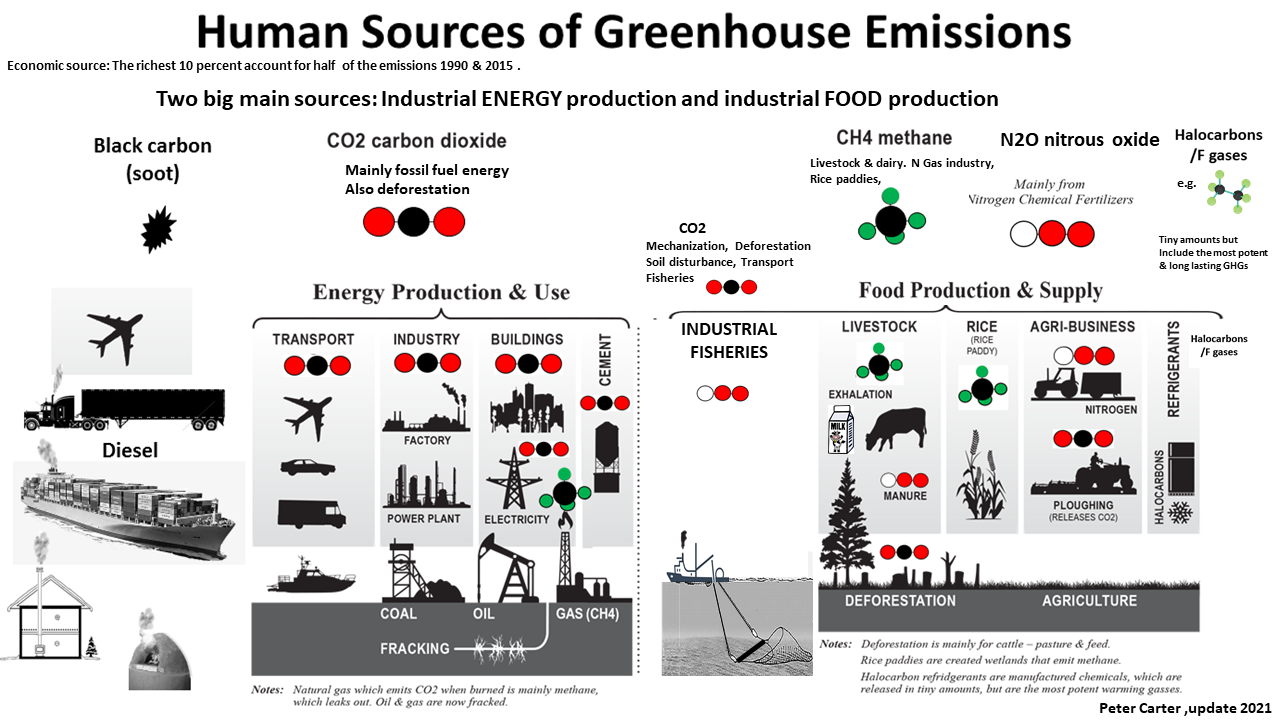
Sources can be simply seen as two main general categories- industrial age energy production and industrial age food production.
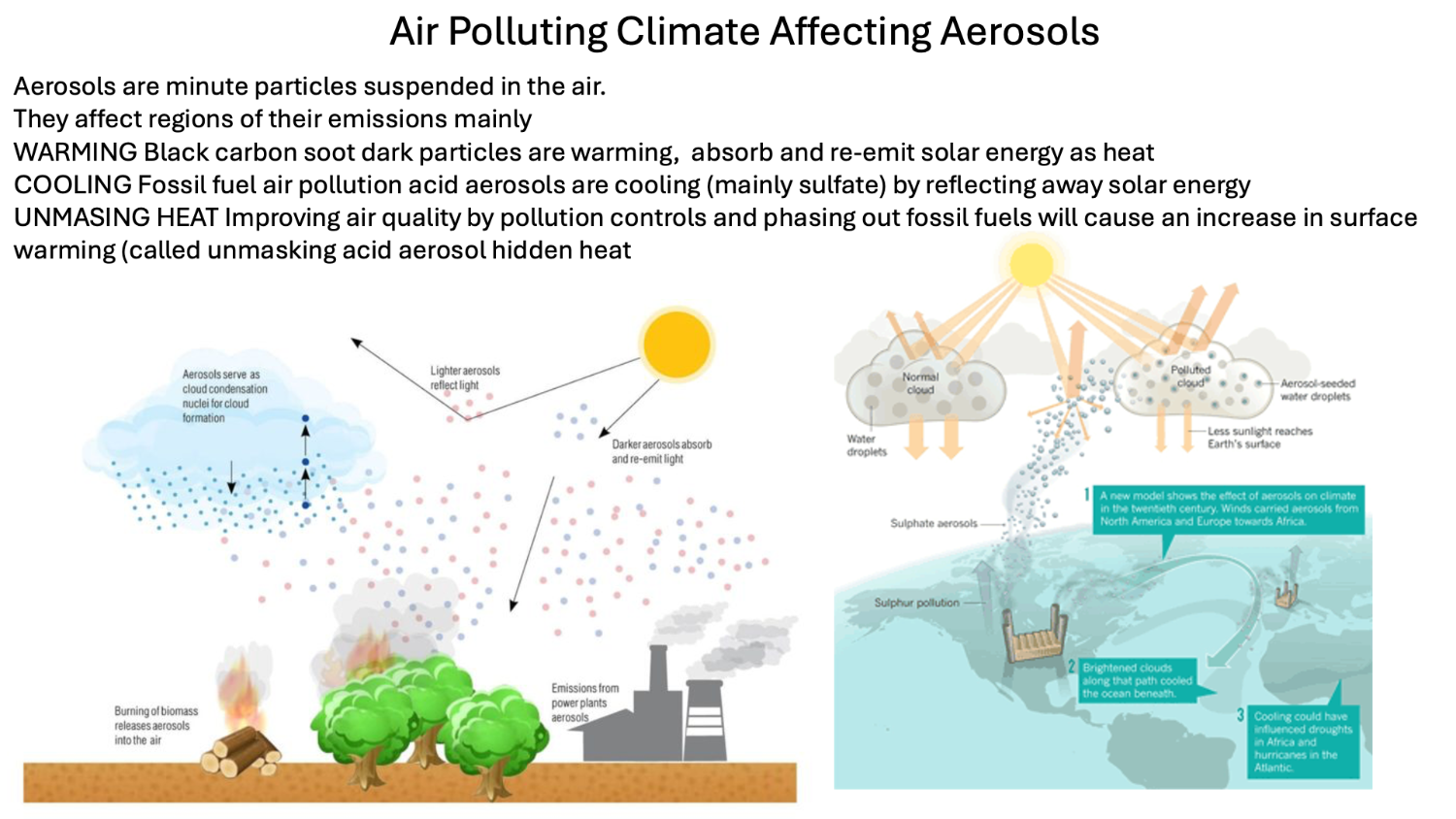
Global warming aerosol emissions include black carbon (soot) from fossil fuels, which is warming.
Sources can be simply seen as two main general categories- industrial age energy production and industrial age food production.
The big three GHGs are classified as long-lived GHGs, due to their long atmospheric lifetime.
Fossil air pollution, by toxic emissions, is well known as a cause and aggravation of asthma and chronic respiratory disease. It is also a cause of many chronic diseases.
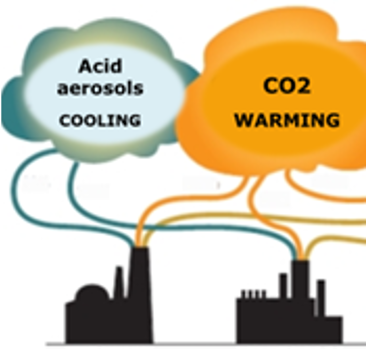
Some air pollution emissions are cooling (acid aerosols).
Some air pollution emissions are cooling (acid aerosols).
Global warming aerosol emissions include black carbon (soot) from fossil fuels, which is warming.
FEEDBACK
Amplifying (+ve) feed-back to global warming is the single worst impact of global warming, and will increase with temperature and with time. It is an inevitable effect of unmitigated global warming. By this feedback effect unmitigated (no decrease in emissions) global warming will increase global warming.
For policy making it is essential to apply committed warming- not today's warming in estimating mitigation, as the science only does.
Climate change science Resources
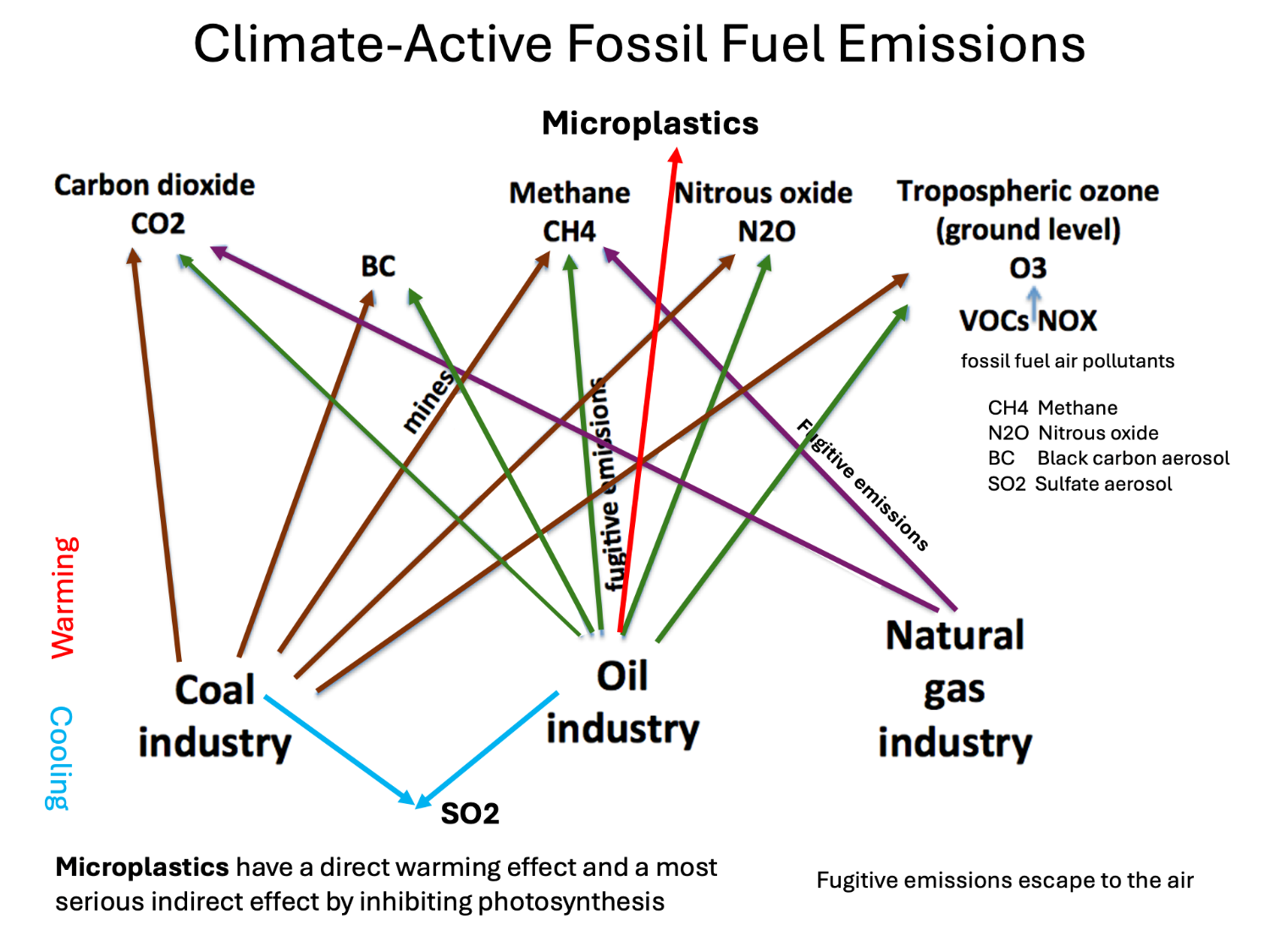
Many climate affecting emissions from fossil fuels
Fossil fuel combustion results in emissions of CO2,
methane, nitrous oxide (small amount), surface ozone,
air pollutant black carbon (soot) and air pollutant
cooling aerosols.
Now we have microplastic air pollution, which could be the
worst of all.
Fossil fuel combustion results in emissions of CO2,
methane, nitrous oxide (small amount), surface ozone,
air pollutant black carbon (soot) and air pollutant
cooling aerosols.
Now we have microplastic air pollution, which could be the
worst of all.
Sulfate aerosols are fossil fuel emissions (air pollution) that are cooling, by reflecting away solar energy from the planet.
Black carbon (soot) aerosols are warming.
Acceleration of global warming by air pollution measures
For decades, fossil fuel cooling air pollution aerosols have offset much of the fossil fuel warming of CO2 emissions. Since 2005 China (far the largest emitter) has been reducing its air pollution, which has reduced the air pollution, cooling sulfate aerosols. The result has been a recent boost in global warming acceleration.
Black carbon (soot) aerosols are warming.
Acceleration of global warming by air pollution measures
For decades, fossil fuel cooling air pollution aerosols have offset much of the fossil fuel warming of CO2 emissions. Since 2005 China (far the largest emitter) has been reducing its air pollution, which has reduced the air pollution, cooling sulfate aerosols. The result has been a recent boost in global warming acceleration.

Methane
Methane is a shorter lasing long lived GHG than CO2, a powerful GHGis emitted by the natural gas industry and coal mining.
Methane is a shorter lasing long lived GHG than CO2, a powerful GHGis emitted by the natural gas industry and coal mining.
ENHANCED GREENHOUSE EFFECT
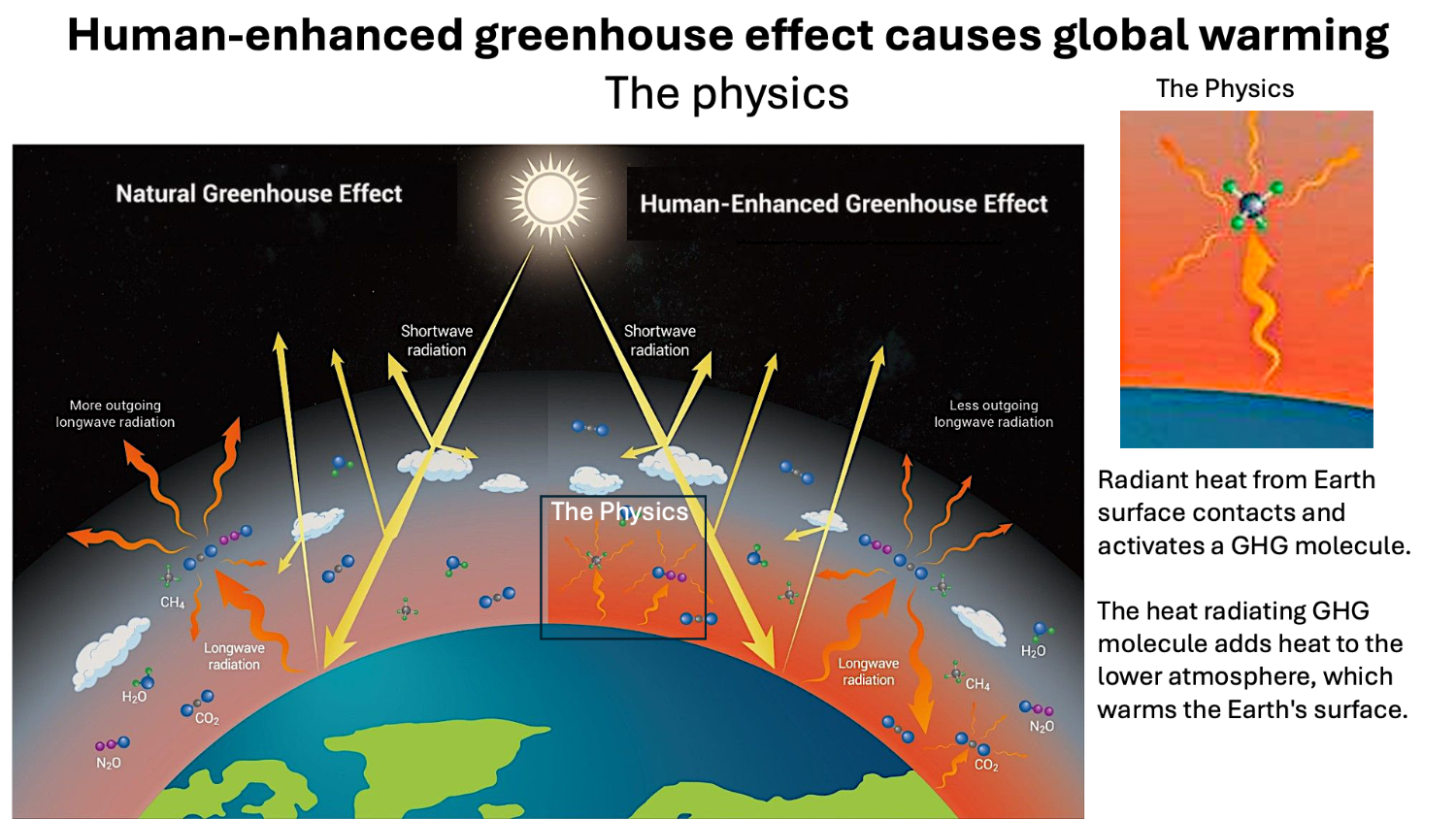
It's well known that global climate change is caused by greenhouse gases (GHGs). They do so by the enhanced greenhouse effect. If it were not for atmospheric GHGs Earth’s average surface temperature would drop from 15 °C to roughl -18°C. That's a 33 °C difference—and Earth would be a lifeless frozen planet.
Atmospheric GHGs are present in tiny amounts (parts per million and per billion of air). Therefore they are extremely powerful heat radiators.
It's well known that global climate change is caused by greenhouse gases (GHGs). They do so by the enhanced greenhouse effect. If it were not for atmospheric GHGs Earth’s average surface temperature would drop from 15 °C to roughl -18°C. That's a 33 °C difference—and Earth would be a lifeless frozen planet.
Atmospheric GHGs are present in tiny amounts (parts per million and per billion of air). Therefore they are extremely powerful heat radiators.
Aerosols are emitted from fossil fuel combustion, as minute particles suspended in the air.
They cause air pollution.
Taken together greenhouse emissions warm and energize the lower atmosphere causing global warming, climate change (disruption), extreme weather events, ocean acidification (on top of ocean warming), and amplifying feedbacks.
Right now we are at the top of a warm period and normally would be cooling off on the way to an ice age.
It just so happens that the main greenhouse emissions produced by our fossil fuel industrial age are the exact same three greenhouse gases- carbon dioxide (CO2) methane (CH4) and nitrous oxide (N2O), that swing the planet in and out of ice ages
4 subpages:
GHGs, Emissions, Sensitivity, Feedbacks
GHGs, Emissions, Sensitivity, Feedbacks
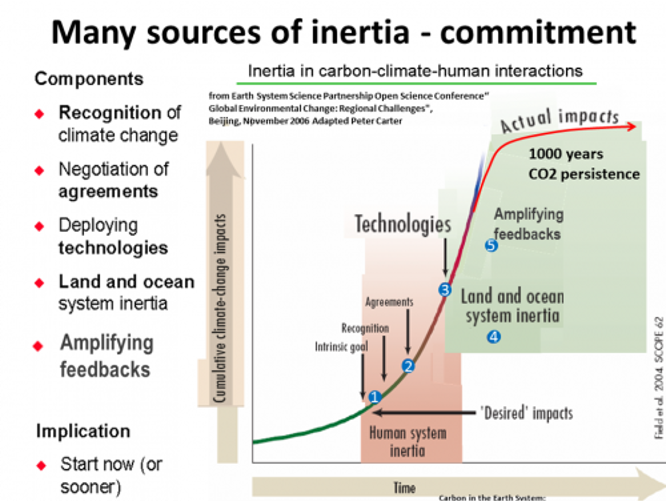
INERTIA
The climate system is characterized by enormous inertia, which implies enormous momentum. This is due to the ocean thermal inertia as 90% of heat from missions going straight to the oceans
Slowing climate change is like slowing the Titanic.
One example is that global warming will last over a thousand years, as will ocean heat, and sea level rise.
Inertias contribute to unavoidable committed future higher degrees of climate change (commitment to more warming)